Key Takeaway
HiTek Ceramic IR and Carbon IR are both professional-grade window tint films with lifetime warranties and 99% UV rejection, but they differ significantly in heat rejection performance. Ceramic IR uses nano-ceramic particles to achieve up to 88% broadband infrared rejection (75% at 780–1025nm), up to 95% glare reduction, and total solar energy rejection (TSER) from 35% to 65% depending on shade. Carbon IR uses nano-carbon particles for up to 62% broadband infrared rejection (75% at 780–1025nm in 5% VLT only), no glare reduction ratings, and TSER from 32% to 61%. Ceramic IR is available in 7 shades including a 70% VLT windshield option; Carbon IR is available in 6 shades. For San Diego drivers prioritizing maximum heat rejection, Ceramic IR is the clear winner. For budget-conscious buyers who still want professional-grade protection, Carbon IR delivers excellent value.
Choosing between window tint film lines affects how much heat and glare the cabin experiences day to day, so it helps to compare real performance numbers rather than relying on the shade name alone. Two options from HiTek Films are the Ceramic IR and Carbon IR lines. Both are advertised with lifetime warranties and 99% UV rejection, but they differ meaningfully in infrared heat rejection, glare reduction, and the number of available shades — differences that matter more on a vehicle with large glass or frequent outdoor parking. Ask any installer for the manufacturer's current spec sheet rather than relying on marketing descriptions alone.
In this guide, we break down every specification, compare them shade by shade with our interactive tool, and help you decide which HiTek Film product is the best fit for your needs and budget.
Quick Verdict
Choose Ceramic IR if:
- • You want maximum heat rejection
- • Glare reduction is important
- • You need 70% VLT for windshield
- • You drive a Tesla or luxury vehicle
Choose Carbon IR if:
- • You want solid performance on a budget
- • Color stability is a priority
- • You don't need the lightest shades
- • Great value for daily drivers
What Is HiTek Ceramic IR?
HiTek's Ceramic IR is an entry-level ceramic film that combines carbon-based technology with nano-ceramic particles. It delivers up to 75% infrared rejection and up to 65% total solar energy rejection (TSER). What sets it apart from Carbon IR is the addition of glare reduction ratings and the availability of a 70% VLT shade — ideal for windshield applications in San Diego.
What Is HiTek Carbon IR?
HiTek's Carbon IR uses nano carbon technology for stable color and solid infrared heat rejection. With up to 75% IRR at 5% VLT and up to 61% TSER, it's an excellent value option. Available in shades from 5% to 50%, Carbon IR provides dependable UV and heat protection without the premium price tag.
Head-to-Head Comparison
Use our interactive comparison tool below to see how each film performs at every shade level. Data sourced directly from HiTek Films official specifications.
Interactive Shade-by-Shade Comparison
Select a shade to compare Ceramic IR vs Carbon IR performance side by side.
At 5% VLT, Ceramic IR delivers higher overall heat rejection and includes glare reduction — making it the premium choice for maximum comfort.
Complete Specification Tables
Ceramic IR Specs
Entry level ceramic film with carbon based technology blending form and function.
| Shade | 5% | 15% | 20% | 35% | 40% | 50% | 70% |
|---|---|---|---|---|---|---|---|
| Visible Light Transmittance | 5% | 15% | 19% | 36% | 39% | 51% | 68% |
| Total Solar Energy Rejection | 65% | 60% | 55% | 50% | 47% | 43% | 35% |
| Infrared Rejection | 75% | 73% | 72% | 75% | 73% | 70% | 73% |
| Glare Reduction | 95% | 83% | 77% | 58% | 55% | 42% | 41% |
| UV Rejection | 99% | 99% | 99% | 99% | 99% | 99% | 99% |
Carbon IR Specs
Nano carbon technology with stable color and solid infrared heat rejection.
| Shade | 5% | 15% | 20% | 35% | 40% | 50% |
|---|---|---|---|---|---|---|
| Visible Light Transmittance | 5% | 15% | 20% | 35% | 40% | 51% |
| Total Solar Energy Rejection | 61% | 53% | 50% | 41% | 36% | 32% |
| Infrared Rejection | 75% | 57% | 54% | 42% | 35% | 32% |
| UV Rejection | 99% | 99% | 99% | 99% | 99% | 99% |
Key Differences Explained
1. Infrared Rejection (IRR)
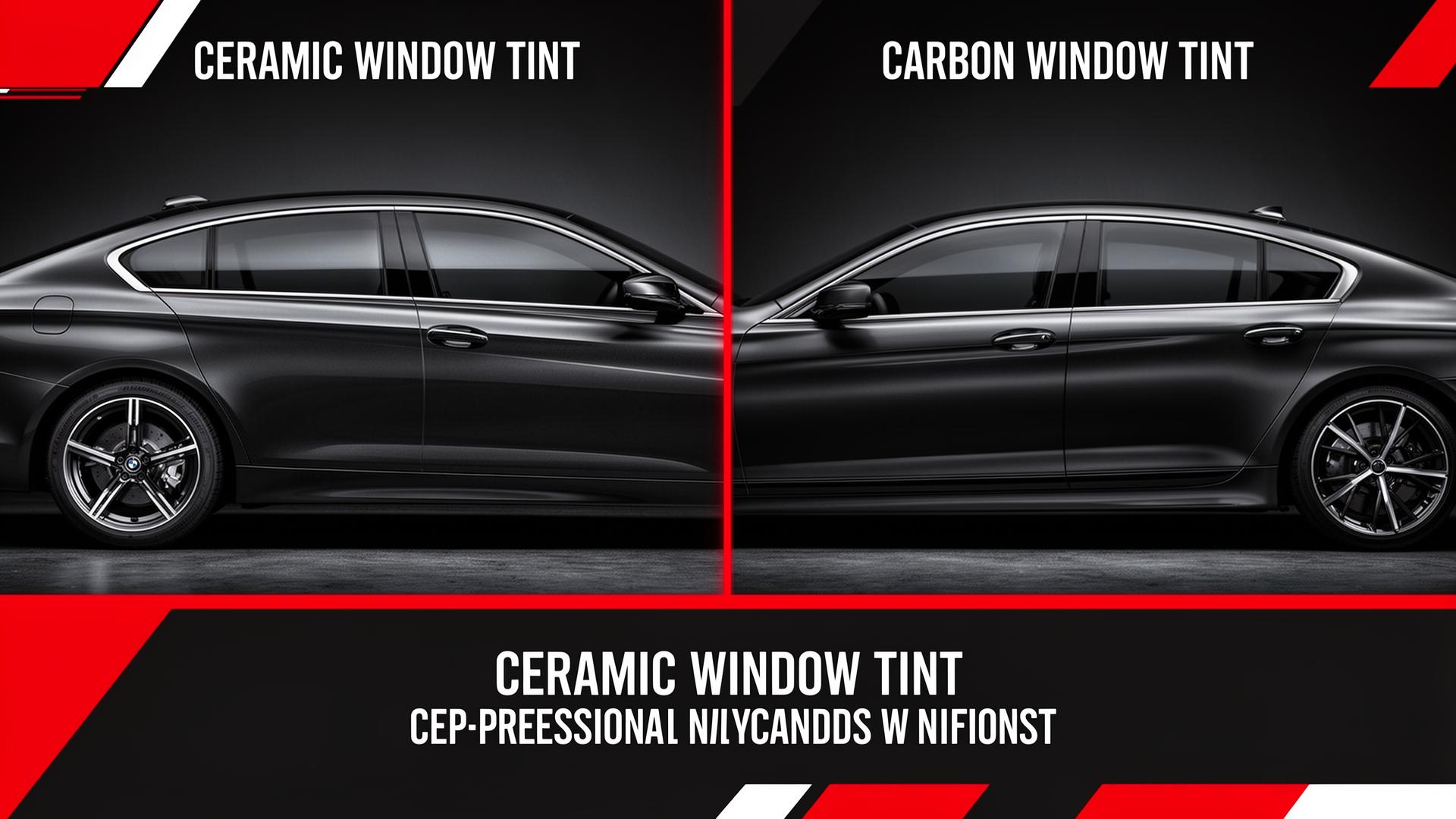
Ceramic IR maintains consistently high IRR across all shades (70–75%), meaning even the lightest 70% shade blocks significant heat. Carbon IR starts strong at 75% for the darkest shade but drops to 32% at 50% VLT. If heat is your main concern, Ceramic IR wins.
2. Glare Reduction
Only Ceramic IR offers rated glare reduction — up to 95% at 5% VLT. This is a significant advantage for drivers dealing with San Diego's intense afternoon sun and coastal glare. Carbon IR does not have rated glare reduction specs.
3. Available Shades
Ceramic IR is available in 7 shades (5%, 15%, 20%, 35%, 40%, 50%, 70%) while Carbon IR offers 6 shades (5%, 15%, 20%, 35%, 40%, 50%). The 70% VLT option exclusive to Ceramic IR makes it the go-to for legal windshield tinting.
4. Price Point
Carbon IR is positioned as the more budget-friendly option. It offers solid protection with stable color at a lower price. Ceramic IR carries a premium for its advanced nano-ceramic construction, higher heat rejection across the board, and glare reduction capability.
Both Films Share These Features
- 99% UV rejection across all shades — maximum skin and interior protection
- Lifetime warranty from HiTek Films when professionally installed
- Non-metallic construction — zero interference with electronics, GPS, or Bluetooth
- Color-stable technology — won't turn purple or fade over time
- Scratch-resistant coating for long-lasting clarity
Which Film Do We Recommend?
At BestAutoTechs, we install both HiTek Films product lines. For Tesla owners and luxury vehicles, we lean toward Ceramic IR for its superior heat rejection consistency and glare reduction. For daily drivers and budget-conscious customers, Carbon IR delivers outstanding value with excellent UV and heat protection.
Either way, both films are professionally installed by our certified technicians with a focus on quality and precision. We offer mobile installation across San Diego County.
Frequently Asked Questions
What is the difference between Ceramic IR and Carbon IR window tint?
Ceramic IR uses nano-ceramic particles for superior heat rejection (up to 75% IRR) and includes glare reduction. Carbon IR uses nano-carbon technology for solid heat rejection at a more affordable price point. Both offer 99% UV rejection and lifetime warranties from HiTek Films.
Is Ceramic IR worth the extra cost over Carbon IR?
Yes, if heat rejection and glare reduction are priorities. Ceramic IR offers consistently higher infrared rejection across all shades, includes glare reduction ratings, and is available in 70% VLT for windshield applications.
Does HiTek Films offer a warranty on their window tint?
Yes, both HiTek Ceramic IR and Carbon IR films come with a lifetime warranty when professionally installed. This covers fading, peeling, bubbling, and discoloration.
Which HiTek film is best for Tesla vehicles?
We recommend Ceramic IR for Tesla vehicles due to its superior heat rejection and zero signal interference. The 70% VLT option is ideal for Tesla windshields.
Ready to Get Your Windows Tinted?
Get a free quote for professional HiTek Films installation. We'll help you choose between Ceramic IR and Carbon IR based on your vehicle and budget.