San Diego Beach Parking Survival: UV, Heat & Salt-Air Tint Guide
Key Takeaway
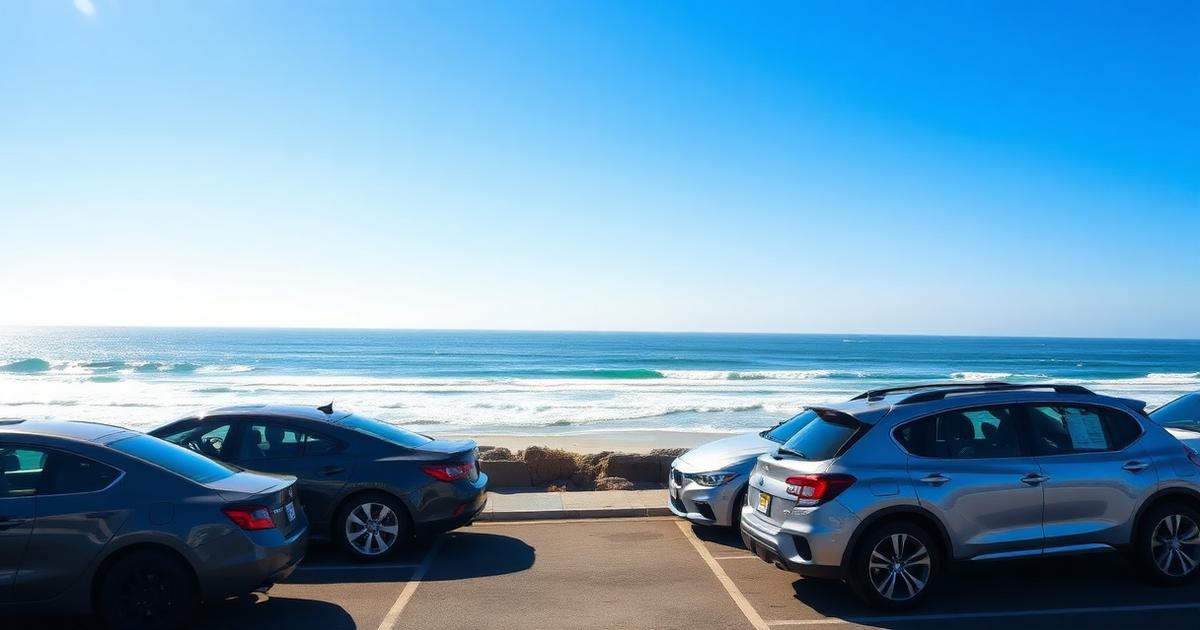
San Diego beach lots like La Jolla Shores, Coronado Central Beach, Pacific Beach and Imperial Beach combine direct UV, reflected ocean glare and salt-laden marine air. Cabin temperatures regularly exceed 130°F within 30 minutes per NWS San Diego data, and reflected UV from sand and water can boost effective UV exposure by 25% according to NOAA. Ceramic window film blocks 99% of UV and rejects up to 70% of solar heat — the most cost-effective protection for vehicles parked at the coast daily.
From La Jolla Shores to Imperial Beach, San Diego's coastal parking lots are the harshest environment your car will ever see. Direct UV plus reflected ocean glare plus salt-laden marine air degrades dashboards, cracks leather, and roasts cabins in under 30 minutes. Here's how to protect it — backed by primary sources from the City of San Diego, NWS, NOAA and Scripps.
Where the Worst Beach Parking Sun Lives in San Diego
Some lots are objectively worse than others — full southern exposure, no shade, sand reflection, and water reflection compound the UV load. The City of San Diego Lifeguard Service maintains beach access information at sandiego.gov/lifeguards, and county beach parks like Fletcher Cove and Moonlight are mapped on parks.sandiegocounty.gov.
The San Diego Tourism Authority, La Jolla by the Sea and the Coronado Visitor Center all warn visitors about midday sun exposure — the same advice applies to your vehicle.
Why Coastal UV Is Worse (NOAA + Scripps Data)
For San Diego beach parking, check the UV forecast and plan for a vehicle that may be hotter when you return than when you arrived. Reflections, cloud cover, sun angle and parking duration vary, so a single coastal exposure percentage is not a useful promise for every visit. Window film can reduce UV and solar energy through the treated glass, but it does not protect you outside the car or replace ordinary exterior care. Take children, pets and heat-sensitive belongings with you, and allow time to cool the cabin before departure.
What Salt Air Does to Cheap Tint
Dyed films use organic dyes that oxidize and turn purple within 2–3 years on the coast. Metallic films corrode at the edges from chloride exposure. Only quality ceramic films (HiTek Ceramic IR is what we install) use ceramic nano-particles that don't oxidize, dye, or corrode.
What Tint Actually Solves the Coastal Problem
Use our Tint Shade Selector to preview legal-spec VLT, then see our ceramic window tint service. We come to you anywhere on the coast — see mobile installation or our La Jolla coverage area.
Related reading: Coastal San Diego UV Reflection and Best Tint for SD Coastal Climate.
Frequently Asked Questions
Which San Diego beach lots are hardest on cars?
La Jolla Shores, Coronado Central Beach, Pacific Beach Boardwalk lots, Mission Beach, and Imperial Beach Pier all combine open southern exposure with reflective sand and water. The City of San Diego Lifeguard Service publishes beach status at sandiego.gov/lifeguards.
Does salt air really damage window tint?
Yes. The California Coastal Commission documents marine salt aerosol carried up to a mile inland. On dyed and metallic films, chloride attacks the adhesive at the edges and accelerates color fade. Ceramic films like HiTek IR are inert and unaffected.
What VLT should coastal San Diego drivers choose?
California law (CVC §26708) caps front side windows at 70% VLT minimum. Rear windows have no limit. For coastal drivers we recommend 70% ceramic on the windshield strip and fronts, and 20–35% ceramic on the rears for maximum heat rejection.
Related Window Tint Guides
More from our auto window tint research library — each guide covers a different part of the same topic.
- window tinting la jollaCoastal San Diego UV Reflection: Why La Jolla, Coronado & PB Drivers Need Stronger Tint
- window tinting del marDel Mar & Solana Beach: The Coastal UV + Salt-Air Window Tint Guide
- window tinting carlsbad caCarlsbad & Oceanside: Luxury Convertible Ceramic IR Tint That Actually Works
- window tinting encinitasEncinitas & Cardiff: The Surf-Lifestyle SUV & Truck Ceramic Tint Guide
- factory tintFactory Tint Isn't Window Tint: What Your Privacy Glass Really Does (and Doesn't)
- hummer h1 window tintTinting a 1997 Hummer H1 for Predator Inc.: Hand-Cut Windshield, Disassembled Sliders & a One-Day Deadline
What Our Customers Say
Get Your Free Tint Quote in 60 Seconds
Premium mobile window tinting across San Diego & Orange County. We come to your home, office, or anywhere convenient — same-week appointments available.
GET YOUR FREE QUOTE
Service Type *
Add-ons (optional)