
Plotter-Cut vs Hand-Cut Window Tint: Which Actually Gives Cleaner Edges (and When Hand-Cutting Wins)
Key Takeaway
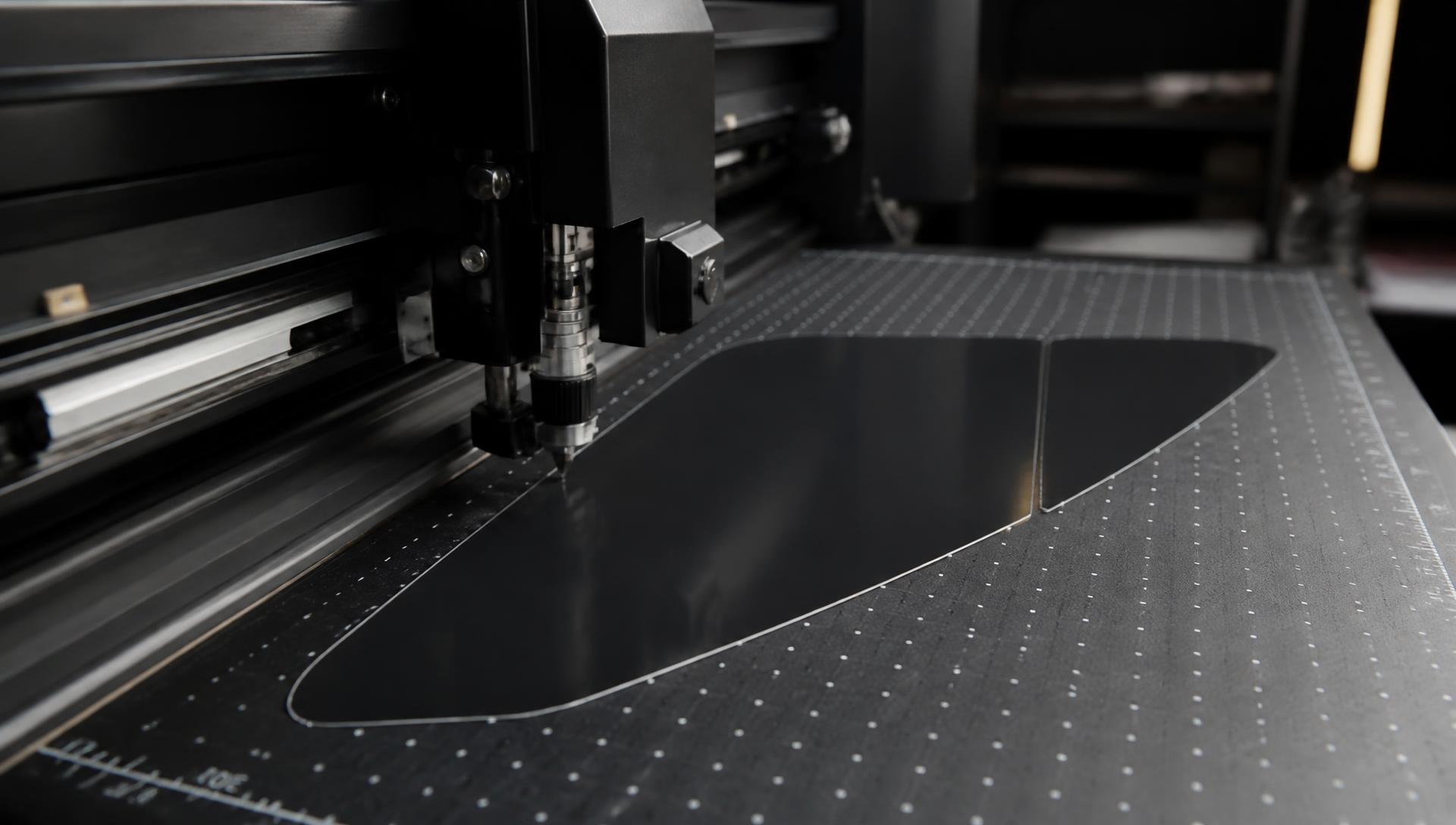
Plotter-cut window tint is cut off the vehicle from a digital pattern, so no blade touches the glass, seals, paint or defroster grid, and the panel can be sized past the visible opening so it tucks under the weather seal with no light gap. Hand-cutting on the vehicle cannot reach the true glass edge on deep-seal doors, which is why in-place hand cuts leave a visible 1/8 to 1/4 inch border and tend to peel from the corners. Hand-cutting is still the correct method for windshields and for classic, custom, modified or rare glass with no stored pattern, but it should be performed on the outside of the glass with heat forming, never trimmed against interior trim.
Ask two tint shops how they cut film and you are likely to get two confident, opposite answers. One will say computer plotter cutting is the only professional method; another will say a skilled hand-cut is just as good or better. Neither claim is complete on its own. Plotter cutting is generally the more consistent choice for vehicles with a stored factory pattern, while careful hand-cutting remains necessary for glass that has no pattern on file. The method matters less than whether the installer tucks the film under the seal and finishes without a visible gap at the window's edge.
What Each Method Actually Is
Plotter-cut (computer-cut). The shop selects your year, make and model in a pattern library, and a blade plotter cuts each window panel out of a roll of film on a cutting mat, away from the vehicle. The pattern is intentionally sized slightly larger than the visible glass so the installer can tuck the edge under the seal.
Hand-cut. The installer rough-cuts an oversize panel, lays it on the outside of the glass, heat-shrinks it to the curvature with a torch and hard card, and trims the perimeter by hand to match the opening before installing it inside. The dangerous variant — and the one that produces most complaints — is trimming the film in place, on the inside of the glass, with the blade running against the seal and trim.
Head-to-Head Comparison
| Factor | Plotter-cut | Hand-cut (on glass, off vehicle) | Hand-cut in place (avoid) |
|---|---|---|---|
| Edge coverage on deep seals | Full — film tucks under seal | Very good with a skilled tech | Always short; visible light gap |
| Risk to seals, paint, trim | None — no blade near the car | Low | High |
| Risk to defroster grid | None | Low | Real — severed tabs and lines |
| Works on rare / custom glass | Only if a pattern exists | Yes — the only option | Yes, poorly |
| Consistency across a fleet | Identical every time | Depends on the installer | Highly variable |
| Typical time per vehicle | Fastest | Slower — skill intensive | Fast and cheap |
| Windshield suitability | Good if a pattern exists | Best for unusual vehicles | Not acceptable |
The Light Gap: The One Defect Everyone Notices
Roll your front windows up in bright daylight and look at the top edge from outside. If you see a thin clear band between the film and the rubber, that panel was trimmed short. It is not just cosmetic. That exposed band is where the adhesive is most vulnerable to UV, moisture and the mechanical scrubbing of the seal every time the glass moves — which is why edges are almost always the first thing to lift. We break down every failure signature in why bad tint always fails at the edges.
The physical reason in-place hand-cutting can't fix this: on a deep-seal door, roughly a quarter inch of glass is inside the rubber at all times. To trim to that true edge with the glass in the door, the blade has to run into the seal. So the installer stops short. On our 1997 Hummer H1 project we removed exactly this kind of previous work — hand-cut doors with a wandering border and lifted corners — and re-did them plotter-cut.
When Hand-Cutting Is the Right Answer
- No pattern exists. Low-volume, imported, kit, military-derived or pre-1990 vehicles frequently aren't in any library.
- The glass has been changed. Aftermarket, replacement or custom-cut glass won't match a factory pattern.
- The body has been modified. Chopped tops, added sliders, deleted quarter glass, roll cages.
- Windshields on unusual vehicles. Big, curved and unforgiving — a hand-cut and heat-shrunk panel beats a mismatched stored pattern every time.
- Odd shapes. Vent windows, quarter glass, sunroof and moonroof panels on older trucks.
This comes up constantly on the vehicles covered in tinting classics, off-road builds and custom vehicles.
Cutting Is Only Half the Job — Heat Forming Is the Other Half
Neither method removes the need to shrink film to compound curves. Automotive glass is curved in two axes; flat film is not. Without proper heat forming on the outside of the glass, you get "fingers" — vertical creases fanning from the corners of rear windows — no matter how perfect the cut was. This is the skill that separates installers, and it is unaffected by whether a plotter or a blade defined the outline. The International Window Film Association publishes consumer guidance on install quality worth reading before you book.
What to Ask Before You Book
- "Will my doors be plotter-cut, or trimmed on the glass?"
- "Does the film tuck under the seal, or stop at the visible edge?"
- "Do you hand-cut my windshield, and is it shrunk on the outside first?"
- "If a blade touches my car and damages a seal or defroster line, what happens?"
- "What film brand and product line, and what does the warranty actually cover?"
The complete pre-booking script is in how to book window tint with confidence. For California legal limits before you pick a shade, see CVC § 26708 and the California DMV driver handbook.
BestAutoTechs is 100% mobile across San Diego County and Orange County. We plotter-cut where a pattern serves the vehicle and hand-cut where it doesn't — and we will tell you which before we start. Explore ceramic window tint or call (858) 977-2693.
Frequently Asked Questions
Is plotter-cut window tint better than hand-cut?
For the overwhelming majority of modern vehicles, yes. A plotter cuts each panel off the vehicle from a digital pattern, so no blade ever touches your glass, seals, paint or defroster grid, and the pattern can be sized past the visible opening so the film tucks under the weather seal with zero light gap. Hand-cutting remains the correct — sometimes the only — method for rare, classic, custom or modified glass that has no stored pattern, and for windshields on unusual vehicles.
Can hand-cut tint damage my car?
It can when it is done on the vehicle. Hand-trimming against the glass puts a live blade next to rubber seals, painted window frames, interior trim and, on rear glass, the defroster grid and antenna lines. The common damage claims are cut door seals, scored paint at the belt line, and severed defroster tabs. A skilled installer hand-cutting on the outside of the glass and finishing away from trim can avoid all of it — but it takes far more skill and time than running a plotter.
Why does my tint have a small gap at the top of the window?
Because the panel was trimmed short of the true glass edge, usually from cutting in place. A properly plotter-cut door panel extends past the visible opening and is tucked under the seal when the glass is rolled down, so when the window is up there is no visible border. A persistent light gap of 1/8 to 1/4 inch along the top or sides is the signature of an in-place hand cut and it is also where peeling usually starts.
Does plotter-cut film cost more?
Not meaningfully. The plotter is a shop overhead cost, not a per-panel charge, and it usually saves installation time versus hand-cutting. What actually drives price is the film itself (dyed vs carbon vs nano-ceramic), vehicle size, and whether old film has to be removed first. If a shop is charging a premium purely for 'computer-cut,' you are paying for marketing.
How can I tell if a hand-cut job was done well?
Look at the borders in direct daylight with the windows up. Good work shows an even, consistent line all the way around, no wavy edges, no light gap on doors, tight corners on the rear glass with no fingering, and no contamination specks. Then roll the windows down and check the top edge of the film for nicks or a scalloped line — that is where a rushed blade shows.
Do you plotter-cut or hand-cut at BestAutoTechs?
Both, chosen per panel. Modern production vehicles get plotter-cut panels as standard. Windshields on unusual vehicles, classics, custom or heavily modified glass and anything with no reliable pattern get hand-cut and heat-formed on the outside of the glass before installation. On our 1997 Hummer H1 project the doors were plotter-cut and the windshield was hand-cut on the same truck, for exactly these reasons.
Related Window Tint Guides
More from our auto window tint research library — each guide covers a different part of the same topic.
- hummer h1 window tintTinting a 1997 Hummer H1 for Predator Inc.: Hand-Cut Windshield, Disassembled Sliders & a One-Day Deadline
- how to choose a window tint installerHow to Book Window Tint With Confidence: The Complete Questions, Warranty & Film-Spec Guide
- cheap window tint costCheap Window Tint Costs 2× More: The Real Price of the Wrong Installer & the Wrong Film
- certified window tint installer san diegoWhat "IWFA-Certified Installer" Actually Means (And Why It Matters in San Diego)
- classic car window tint san diegoWindow Tint for Classics, Off-Road Builds & Custom Vehicles: What Makes These Installs Different
- dust free mobile window tintingMobile Window Tinting in Shops, Yards & Job Sites: How We Get a Dust-Free Install Anywhere in San Diego County
What Our Customers Say
Get Your Free Tint Quote in 60 Seconds
Premium mobile window tinting across San Diego & Orange County. We come to your home, office, or anywhere convenient — same-week appointments available.
GET YOUR FREE QUOTE
Service Type *
Add-ons (optional)