Petco Park Parking Heat: What 81 Home Games Do to Your Car
Key Takeaway
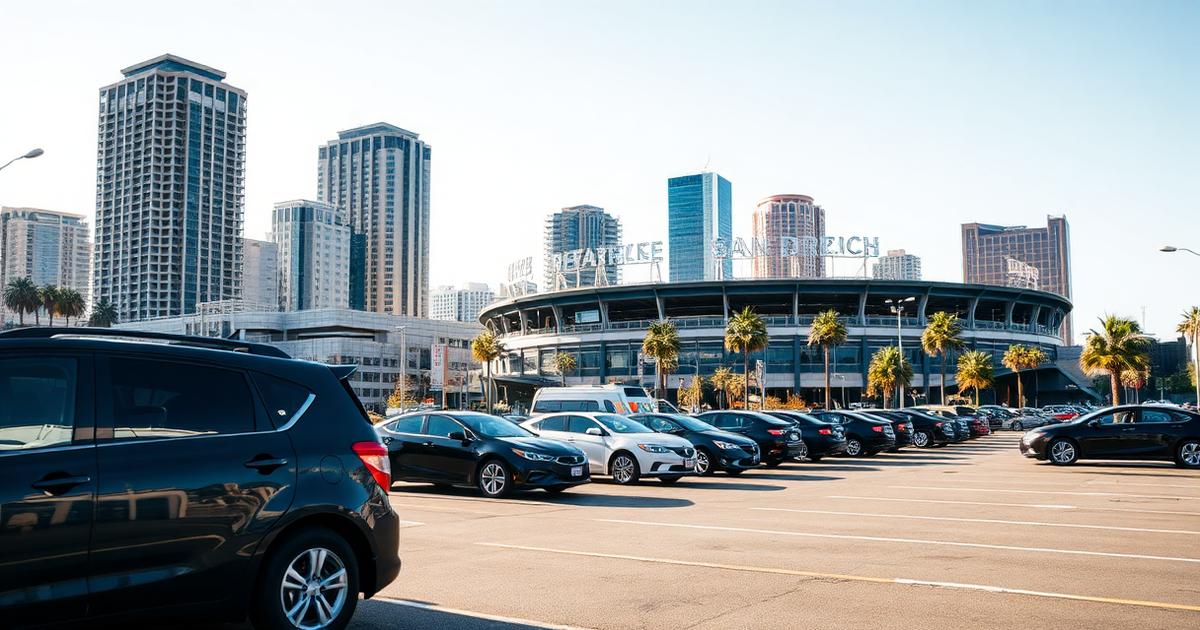
A San Diego Padres home schedule puts 81 games on the calendar, and most day games leave fans' vehicles parked on open East Village asphalt for four to six hours. NHTSA measurements show cabin air climbing about 19°F in ten minutes and 34°F in thirty, so an 82°F downtown afternoon commonly produces cabin temperatures above 130°F. Parking structures, MTS Trolley Green and Orange line service to Gaslamp Quarter station, reflective shades and 99% UV-blocking ceramic window film are the four practical ways downtown fans reduce that heat load.
Eighty-one home games. Add concerts, Comic-Con overflow, monster jam weekends and the occasional international friendly, and downtown San Diego's parking inventory runs hot from April through October. If you hold Padres season tickets or park in East Village for work, your car spends several hundred hours a year absorbing direct sun on unshaded asphalt. This guide covers what that actually does to the vehicle, which parking choices matter, and how ceramic window film changes the math.
The Downtown Heat Problem Is Pavement, Not Just Air
The National Weather Service San Diego office forecasts coastal downtown highs in the upper 70s to mid 80s for most of the season — mild by inland standards. That number understates the problem. Asphalt in an open lot absorbs solar energy all morning and re-radiates it upward through the afternoon, so the air surrounding a parked car sits well above the official reading, and the glass, dash and seats keep absorbing energy long after you've walked to the gate.
NHTSA's hot-car research is the clearest reference point: interior temperature climbs about 19°F in the first ten minutes and roughly 34°F within thirty, and cracking the windows changes very little. The CDC's extreme heat guidance and San Diego County HHSA heat advisories both use the same framework.
Typical Downtown Parking Scenarios
| Scenario | Exposure | What suffers first |
|---|---|---|
| 1:10 p.m. day game, open surface lot | 4–6 hrs full sun | Dash top, steering wheel, seat bolsters |
| 6:40 p.m. night game, open lot | 2–3 hrs low-angle sun | Driver-side glass and door panel |
| Weekday commute + game, structure | Minimal direct sun | Little heat damage; glare on the drive home |
| Street parking, Barrio Logan / East Village | Full sun, variable | UV fade on one side of the interior |
The pattern that shows up in the cars we work on: interiors age unevenly. The passenger side of a car that always parks facing the same direction fades faster, and dashboards develop a dull, chalky finish long before the rest of the cabin shows wear.
Transit Alternatives Worth Knowing
If you'd rather leave the car home entirely, San Diego MTS runs Trolley Green and Orange line service to Gaslamp Quarter and 12th & Imperial, both walking distance to the park. SANDAG publishes regional ridership and transit planning data, NCTD COASTER service brings North County fans down the coast for weekday games, and the City of San Diego maintains downtown parking meter and permit rules. Official ballpark parking guidance is published by the San Diego Padres.
Most fans still drive. Families with young kids, anyone coming from Poway, Santee or Chula Vista after work, and season-ticket holders hauling gear all end up in a lot — which is where film earns its keep.
What Ceramic Film Actually Changes
Solar energy reaching your glass is roughly 3% ultraviolet, 44% visible light and 53% infrared. Dyed film mainly darkens the visible portion and does comparatively little to block infrared, which is why a very dark dyed tint can still leave a cabin feeling hot. Ceramic film is formulated to reject a larger share of the infrared band, so two films at the same visible-light percentage, such as 20%, can produce noticeably different cabin temperatures depending on their underlying composition. Ask any installer for the film's actual total solar energy rejection figure rather than relying on the VLT percentage alone. We break the physics down in our solar radiation guide and compare film families in our ceramic vs carbon IR comparison.
For downtown parking we usually recommend one of two setups:
- Legal daily driver: 70% ceramic IR on the windshield and front sides, 20–35% on rears. Nearly invisible, night visibility unchanged, big infrared reduction.
- Maximum heat rejection: 70% ceramic windshield, 70% fronts, 5–20% rear sides and back glass. The most common spec for families whose kids sit in the back.
Either way the film should carry a manufacturer label as required by CVC §26708. Our California tint statute guide walks through the exact wording.
A Practical Game-Day Checklist
- Choose a structure over a surface lot when the price difference is under a few dollars — it is the single biggest temperature variable.
- Park facing away from the afternoon sun so the windshield isn't taking direct load for four hours.
- Keep a reflective windshield shade in the trunk; it stacks with film rather than replacing it.
- Never leave children, pets, aerosol cans, electronics or medication in the car — see our cabin heat safety guide.
- Vent for 30 seconds with the windows down before running the A/C; it cuts cooldown time noticeably.
Get It Done Without Losing a Saturday
We install at downtown residential garages, workplace lots and driveways across San Diego County, so a full ceramic install fits into a normal workday. Start with our ceramic window tint service, see how mobile installation works, or preview shades with the tint shade selector. Recent local work is in the portfolio, and San Diego city coverage lists the neighborhoods we serve.
Frequently Asked Questions
How hot does a car get in a downtown San Diego lot during a day game?
NHTSA measurements show cabin air rising roughly 19°F in the first 10 minutes and 34°F within 30 minutes. A 1:10 p.m. first pitch on an 82°F day routinely leaves a dark-interior car above 130°F by the seventh inning, and open asphalt lots in East Village run hotter than shaded street parking because the pavement re-radiates heat into the underside of the car.
Which downtown parking option is coolest for Padres games?
Structures beat surface lots every time. Padres Parkade, Tailgate Park replacements and the Hilton/Convention Center structures keep glass out of direct sun. If you only find open-lot parking, park nose-in so the windshield faces away from the afternoon sun and use a reflective shade in addition to film.
Can window tint replace a sunshade?
No — they solve different problems. Ceramic film rejects infrared energy continuously through every window, including while you drive. A folding shade only blocks the windshield while parked. Together they are the most effective combination for all-day downtown parking.
Is 20% tint legal on a car I drive downtown at night?
California Vehicle Code §26708 allows any darkness on rear side windows and the back glass, but front side windows must transmit at least 70% of light. A high-clarity 70% ceramic front pairs with darker rears, stays legal at night, and still rejects most of the infrared heat.
Do you install tint near Petco Park?
Yes. Our mobile crew installs in East Village, Little Italy, Bankers Hill, Barrio Logan and Downtown residential garages, as well as at workplaces throughout the county. We bring our own power and water and work in a garage stall or driveway.
Related Window Tint Guides
More from our auto window tint research library — each guide covers a different part of the same topic.
- uv protection window tint skin cancerSharp, Scripps & UCI Health Dermatologists Agree: In-Car UV Is California's Overlooked Skin Cancer Risk
- hot car pet safety san diegoSan Diego Zoo & Safari Park Member Guide: Pet Safety, Cumulative UV & Ceramic Tint
- wildfire smoke car interior protectionSan Diego Wildfire Smoke & PM2.5: How It Destroys Car Interiors (And What Ceramic Tint Actually Does)
- how hot does a parked car getSan Diego Zoo & Safari Park: Pet Heat Safety + Cabin Temperature Data
- uv blocking window tint san diegoUV Exposure & Skin Cancer in Southern California: How Window Film Protects You
- san diego heatwave car safetySan Diego Heatwave Car Safety: The Numbers, the Risks and What Tint Changes
What Our Customers Say
Get Your Free Tint Quote in 60 Seconds
Premium mobile window tinting across San Diego & Orange County. We come to your home, office, or anywhere convenient — same-week appointments available.
GET YOUR FREE QUOTE
Service Type *
Add-ons (optional)